


Brian
-
Posts
221 -
Joined
-
Last visited
-
Days Won
8
3 Followers



Brian's Achievements






-
 10 Rules for Hospitality Group Chats When did joining a kitchen brigade also mean handing your employer access to your personal phone — 24 hours a day? WhatsApp has become part of everyday hospitality life. Kitchen rotas are posted on it. Shift changes are arranged through it. Photographs of prep are shared. Managers send instructions. Chefs arrange cover. Questions are asked about stock, deliveries, bookings and tomorrow's mise en place. Used properly, a WhatsApp group can be useful. Used badly, it can turn an employee's personal mobile phone into an extension of the workplace — one that follows them home at the end of every shift. At Unichef, The National Chefs Union, we are increasingly hearing from chefs who either don't want to join workplace WhatsApp groups or feel unable to escape from them once they have. So where should the boundaries be? Here are our 10 Rules for Hospitality WhatsApp Groups. 1. Joining a WhatsApp group should not mean being permanently on duty A chef finishes work. They clock out, get changed and go home. That should normally mean work has finished. It should not mean: 10:45pm: “Who's opening tomorrow?” 11:10pm: “Has anyone ordered the salmon?” 11:35pm: “Can somebody send me the figures?” 6:15am: “Why haven't you replied?” There is currently no standalone statutory UK right to disconnect from work outside contracted hours. The Government has previously committed to introducing a Right to Switch Off through a statutory Code of Practice, but as of August 2026 that code has not yet created a general legal right to ignore every out-of-hours communication. But employers should not confuse the absence of a specific “WhatsApp law” with permission to treat employees as permanently available. Government guidance already says that working time can include unpaid overtime which an employer asks somebody to perform. UNICHEF RULE: If a message can wait until the employee's next shift, let it wait. 2. A personal phone is still a personal phone Most hospitality WhatsApp groups operate on employees' own mobile phones, using their own telephone numbers, their own data and their own WhatsApp accounts. That matters. An employer may reasonably need a method of communicating with its workforce. That does not automatically mean the employer can insist that every employee turns their private telephone and private WhatsApp account into the company's communications system. If WhatsApp is essential to the operation, employers should consider whether an official system, work device, rota app, email account or alternative communication method should be available. The Information Commissioner's Office warns that using workers' own devices for company business creates additional privacy and security risks and says organisations should assess and manage those risks. UNICHEF RULE: Employers can reasonably expect communication. They should not automatically expect ownership of the employee's personal device. 3. Nobody should be disadvantaged simply because they do not want WhatsApp Not everyone wants WhatsApp. Not everyone owns a smartphone. Some people deliberately keep social media and messaging apps away from work. Others may have accessibility, privacy, religious, family or personal reasons for not wanting their mobile number circulated among colleagues. An employer therefore needs to think very carefully before declaring: “Everybody MUST be in the WhatsApp group.” There is no simple law stating that an employee can always refuse every workplace messaging system. If an employer has a legitimate and reasonable communication requirement, employees may be expected to cooperate with reasonable workplace arrangements. But there is a considerable difference between: “You must remain contactable by the company.” and: “You must install this particular application on your personal telephone, give your private number to your colleagues and monitor it outside work.” Where a reasonable alternative is available, Unichef believes employers should provide one. UNICHEF RULE: No employee should be isolated from essential workplace information because they decline to participate in a personal WhatsApp group. 4. Rotas and shift changes need proper confirmation This is one of the biggest problems in hospitality. A manager posts: “New rota guys.” Twenty-seven messages follow. Someone sends a joke. Someone asks about Saturday. Someone posts a photograph. The rota disappears halfway up the conversation. Then three days later: “You were supposed to be in at 7.” Critical information such as scheduled working hours should not depend upon whether somebody happened to scroll through 83 WhatsApp messages while they were off duty. The Employment Rights Act 2025 also now expressly recognises that employers may make shift requests to multiple workers through a group text message or app in the context of the new shift-notice provisions. That is another indication of just how significant digital group communications have become in modern employment. UNICHEF RULE: Rotas and compulsory shift changes should be issued through a clearly identified official system, and significant changes should be directly confirmed with the employee concerned. A blue tick should not replace proper management. 5. Do not conduct disciplinary management through WhatsApp This should be obvious. Unfortunately, it isn't. Messages such as: “Who left this mess?” “This is unacceptable.” “John, explain yourself.” “If you can't manage your section we'll find someone who can.” have no place in a group containing someone's colleagues. Performance concerns should be dealt with privately, professionally and through the employer's proper procedures. Group humiliation is not performance management. Nor should WhatsApp become a substitute for investigations, grievance meetings, return-to-work discussions or disciplinary processes. Managers should also remember something incredibly important: WhatsApp messages can become evidence. A comment written casually at 11pm can later appear in a grievance, subject access request or Employment Tribunal bundle. UNICHEF RULE: Praise publicly if appropriate. Manage problems privately. 6. Never discuss an employee's sickness or medical condition in the group This is particularly serious. Messages such as: “Jane is off with anxiety again.” “Pete's back is playing up.” “Sarah has another hospital appointment.” should not be casually circulated among an entire kitchen brigade. Health information can constitute special category personal data, which receives additional protection under UK data protection law. The ICO specifically warns employers that workplace monitoring and communications can capture particularly sensitive information, including health information, and that such information requires additional protection. The team may need to know: “Jane will not be working tonight.” They generally do not need Jane's medical history. UNICHEF RULE: Absence can be communicated. The reason for somebody's absence usually does not need to be. 7. Don't turn WhatsApp into unpaid administration One message takes thirty seconds. Another takes two minutes. Then: “Can everyone check tomorrow's function sheet?” “Please confirm you've read the new allergen procedure.” “Can all chefs send me their availability?” “Watch this training video before tomorrow.” “Send your stock requirements tonight.” Individually these can look insignificant. Collectively they can become substantial amounts of work performed outside someone's paid shift. Government working-time guidance includes unpaid overtime an employer asks somebody to perform when calculating working hours. National Minimum Wage rules also look at the reality of whether work is actually being performed, rather than simply what an employer calls it. HMRC guidance on on-call arrangements makes clear that where somebody is at home, waiting alone will not normally count for minimum-wage purposes — but actual work performed can change the position. There will inevitably be occasional brief communications in hospitality. But if staff are regularly required to perform administrative tasks from home, employers need to stop pretending that this activity somehow ceases to be work because it happens on WhatsApp. UNICHEF RULE: Required work should be done in working time. 8. Respect the chef's statutory rest Hospitality already has a long-hours problem. Chefs commonly finish late and return early. The Working Time rules generally give adult workers a right to 11 consecutive hours' daily rest between working days, subject to exceptions and compensatory-rest provisions in particular circumstances. So consider the culture created when a chef finishes at 10pm and receives management messages at: 10:30pm. 11:15pm. Midnight. 6am. Even where simply receiving a message does not itself automatically interrupt statutory rest, a workplace culture requiring employees to read, engage with and respond to work throughout their rest period deserves very serious scrutiny. Rest is not laziness. It is part of safe working. And in a commercial kitchen, where employees work with knives, boiling liquids, heavy equipment, machinery, flames and extreme temperatures, fatigue matters. UNICHEF RULE: Off duty should genuinely mean off duty. 9. Workplace group chats need the same standards as the workplace WhatsApp is not a legal-free zone. Comments that would be unacceptable standing at the pass do not suddenly become acceptable because somebody adds a laughing emoji. Employers should make clear that workplace messaging policies cover: bullying; sexual harassment; discriminatory comments; racist, sexist, homophobic or ableist material; threatening behaviour; inappropriate photographs; gossip about colleagues; sharing confidential information; and targeting or excluding individuals. The casual nature of WhatsApp can encourage people to type something they would never dream of putting into an email headed: “Dear Human Resources...” Employees should assume that anything written in a workplace group could eventually be read by management, HR, a union representative, a solicitor or an Employment Tribunal. That thought alone would improve many kitchen group chats enormously. UNICHEF RULE: If you wouldn't say it formally at work, don't put it in the work WhatsApp group. 10. Every employer should have a Workplace Messaging Policy This is perhaps the most important rule. Hospitality businesses have policies for: food hygiene; uniform; absence; holidays; discipline; health and safety; allergens; social media. Yet many have absolutely no policy governing a communications channel that their managers and employees may use hundreds of times every week. That needs to change. A sensible workplace messaging policy should establish: whether membership is compulsory or optional; what the group is actually for; what information must never be shared; expected communication hours; whether out-of-hours responses are required; how urgent communications will be identified; how rotas and shift changes are formally confirmed; alternative arrangements for employees who do not use WhatsApp; rules on bullying, harassment and inappropriate content; management responsibilities; data protection arrangements; how employees leave groups when employment ends; and where formal HR matters should be communicated instead. The ICO says employers must consider privacy when using monitoring and communication technologies, be transparent with workers and ensure processing of workers' information is lawful, fair and proportionate. A properly written policy protects employers as well as employees. WhatsApp Is a Tool — Not a Workplace Unichef is not arguing that hospitality should stop using WhatsApp. That would be unrealistic. Used sensibly, it can be quick, convenient and extremely useful. What we are saying is that boundaries matter. A chef selling eight or ten hours of their labour to an employer has not automatically sold the remaining sixteen hours of their day as well. Their personal telephone does not become company property. Their evening does not become an unpaid extension of the shift. Their medical information does not belong in the kitchen group. And their failure to respond instantly to a message while spending time with their family should not automatically become a question of commitment. Technology has changed the way hospitality communicates. Employment standards need to catch up. The Unichef Principle Employers have a legitimate right to communicate with their workforce. Employees have a legitimate right to privacy, rest and a life outside the workplace. Good management respects both. WhatsApp isn't the workplace. And being employed shouldn't mean being permanently online. Unichef — The National Chefs Union Supporting a safer, fairer and more professional hospitality industry. This article provides general employment information and should not be treated as individual legal advice. Employment rights can depend upon contractual terms, employment status and the particular circumstances of each case.
 -
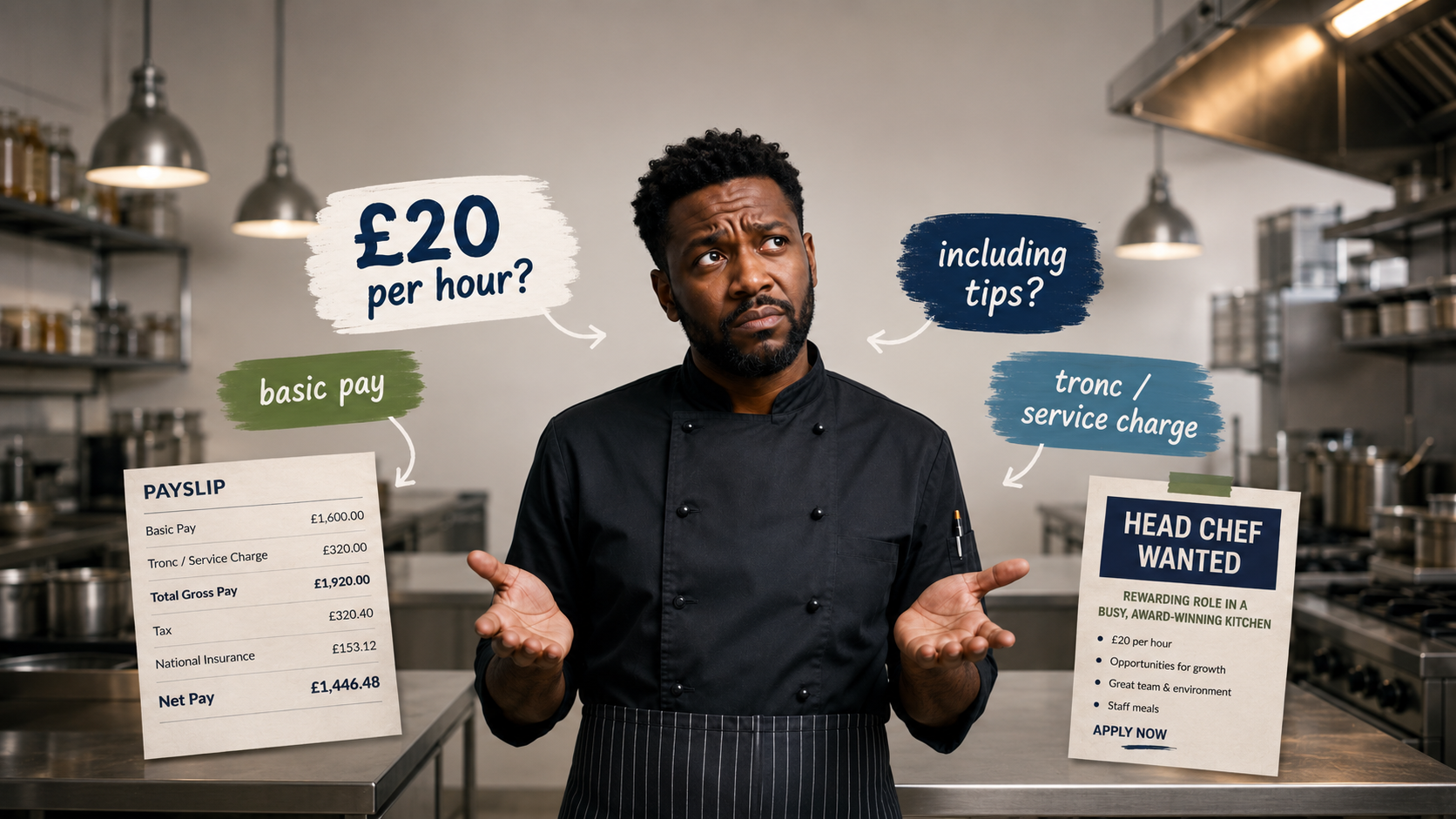 £20 an Hour? Not Quite. How Hospitality Employers Are Using Tips to Inflate the Headline Rate of Pay Something troubling is beginning to appear with increasing regularity in hospitality recruitment. A chef sees a vacancy advertised at £18, £20 or even £22 per hour. They apply believing that is the wage being offered for their skills, experience and professional responsibility. But somewhere further down the recruitment process — or sometimes when the contract arrives — comes an important qualification: “Including tips.” Or: “Including tronc.” That changes the picture considerably. Current hospitality vacancies demonstrate exactly this type of advertising. Some London-area vacancies advertise hourly rates or salary packages explicitly “including tronc”. Others take the much clearer approach of stating the guaranteed basic hourly rate first, followed separately by the anticipated service charge and the resulting expected total earnings. Unichef believes there is an important difference between those two approaches, and chefs need to understand it. Your Tip Is Not Your Employer's Wage The law is actually remarkably clear on one point,Tips do not form part of basic pay. The Government's statutory Code of Practice defines basic pay as the amount guaranteed to the worker for their contracted hours. It specifically states that tips are not regarded as basic pay even where the worker has a contractual right to receive them, because the amount is not guaranteed. There is another important distinction. Tips, gratuities and service charges have not been allowed to count towards National Minimum Wage pay since 1 October 2009. An employer must satisfy their minimum-wage obligation from qualifying wage payments without relying upon customer tips. For workers aged 21 and over, the National Living Wage has been £12.71 per hour since 1 April 2026. So consider a chef vacancy promoted as: £20 per hour — including tips. If the guaranteed basic wage were £12.71 and the remaining £7.29 were anticipated tronc or service charge, the employer would actually be funding only £12.71 of that headline £20 rate. The other £7.29 would be coming from customers. For a chef working 45 hours a week, that would mean £328.05 of the advertised weekly “£20 an hour” package could potentially be coming from customer gratuities rather than the employer's basic wage. That is a very different employment proposition from: £20 per hour PLUS tips. And it is one that applicants deserve to understand before accepting the job. Is It Legal? Potentially, yes — if it is transparent..but only just There is nothing inherently unlawful about advertising expected total earnings which include tronc or service charge, provided the employer is complying with minimum-wage legislation and the worker receives their lawful allocation of tips. But that does not mean anything goes. There is a significant difference between advertising: £13.50 basic + average £6.50 tronc — typical earnings £20 per hour and simply advertising: £20 per hour before revealing later that the figure includes variable customer tips. The first tells the chef exactly what the employer is guaranteeing. The second may create a very different expectation about the contractual rate of pay. Employment contracts are legally binding agreements and can arise through written or verbal agreement. Acas specifically identifies the rate of pay as one of the terms which may be contained within a job offer. An accepted unconditional offer can itself create contractual obligations. Employers cannot simply change agreed contractual terms without agreement merely because a later written contract says something different. Employers must also provide employees and workers with written particulars setting out their principal employment terms, including remuneration, on or before the first day of employment. So if somebody applies for a job advertised at £20 an hour, is offered the job at £20 an hour and accepts on that basis, only then to discover that the employer regards perhaps £6 or £7 of that figure as anticipated tips, we would certainly advise that worker not simply to assume the employer's interpretation is legally decisive. The advert, correspondence, interview discussions, offer letter and contract may all matter. The Customer Is Becoming the Employer's Wage Subsidy This is where Unichef's wider concern begins. A tip traditionally means something very simple.A customer receives good service and voluntarily decides to reward the people who provided it. It is a reward from the customer to the worker. It was never intended to become an accounting mechanism through which an employer could advertise a skilled chef at £20 an hour while personally funding little more than statutory minimum wage. Yet economically that can be the effect. The chef still sees £20.The employer can still advertise £20. But a substantial proportion of the apparent wage is being funded by diners through service charge and gratuities. That matters enormously in a skilled profession.A qualified Chef de Partie, Sous Chef, or Head Chef should be paid by their employer according to their skills, experience, responsibilities, and contributions to the business. Customer generosity should sit on top of that value, not disguise how little of that value the employer is actually prepared to pay. We've Been Here Before Hospitality has a long and uncomfortable history with tipping. Before October 2009, tips passing through payroll could under certain circumstances count towards minimum-wage calculations. That was eventually stopped. Since then, tips and service charges cannot be used to satisfy the statutory minimum wage. But another problem remained. For many years there was no general legal requirement requiring hospitality employers to pass all service charge income to workers. A Government consultation in 2016 expressly acknowledged that employers were not legally required to pass some or all service charge to staff. That position changed fundamentally on 1 October 2024, when the Employment (Allocation of Tips) Act 2023 came into force. Employers must now pass qualifying tips, gratuities and service charges to workers without employer deductions and allocate them fairly and transparently. Workers can challenge failures through the employment tribunal system. In other words, one of hospitality's old financial cushions was removed. The customer's tip now belongs where most customers probably assumed it belonged all along: with the workforce. Service Charge Was Once a Very Useful Cushion There is also an important VAT distinction. A genuinely optional tip or discretionary service charge is generally outside the scope of VAT. A compulsory service charge forms part of the consideration for the meal and is therefore subject to VAT. Historically, where service-charge money was retained by the business rather than distributed to workers, it became part of the funds available within the business and could therefore support its wider cash flow and liabilities. We should be careful not to claim that every restaurant specifically used retained tips to pay its VAT bill without evidence. But the wider principle is undeniable: money customers may have believed was rewarding staff could historically be retained by the business. The 2024 legislation was introduced precisely because Parliament decided that arrangement was no longer acceptable. And now we appear to be witnessing the next adaptation. If employers can no longer retain the tips themselves, some appear increasingly willing to incorporate anticipated tips into the headline remuneration package instead. Different mechanism. Similar financial attraction. And Then Hospitality Asks for a VAT Cut This is where the wider political argument becomes uncomfortable. Parts of the hospitality industry have repeatedly argued that the sector needs financial assistance, lower taxation and particularly a reduced rate of VAT. There are many excellent hospitality businesses for whom those arguments deserve serious consideration. Unichef has no interest in attacking responsible employers. But there is another side of hospitality which policymakers should not ignore. If an operator pays a professionally qualified chef close to statutory minimum wage and then relies upon customers' tips to transform that into an apparently respectable £18 or £20 hourly package, should that same operator automatically receive further financial assistance from the taxpayer? We don't believe that question is unreasonable. Before demanding that Government reduce the tax burden on hospitality, perhaps the industry should demonstrate how much of any saving would actually reach its workforce. Because there is little public benefit in reducing VAT simply to increase margins while skilled hospitality workers remain dependent upon customers to turn minimum wages into something resembling professional pay. Unichef's Position: Show the Real Wage We are not suggesting that tronc systems should disappear. Properly operated, they allow customers to reward the entire team responsible for their experience — including chefs who might otherwise rarely receive direct tips. Nor are we suggesting that every employer advertising an inclusive package is behaving dishonestly. Our demand is much simpler: Advertise the guaranteed wage separately from the tips. If the employer pays £14 an hour and staff typically receive another £5 an hour in tronc, say so. £14 guaranteed basic pay + approximately £5 tronc. Do not simply advertise: £19 per hour ( typical earnings ) A customer tip is not an employer's wage, the Government's own statutory guidance recognises that distinction. Hospitality recruitment should recognise it too. A Warning to Chefs When applying for a hospitality position advertised at an attractive hourly rate or annual salary, ask one very simple question before accepting: “What is the guaranteed basic salary or hourly rate before tips, service charge and tronc?” Get the answer in writing. Keep the original vacancy advertisement. Keep the job offer. And compare both with the contract you are subsequently asked to sign. Because £20 per hour and £20 per hour including customer tips are not the same thing. Not economically, Not contractually, And certainly not morally
 -
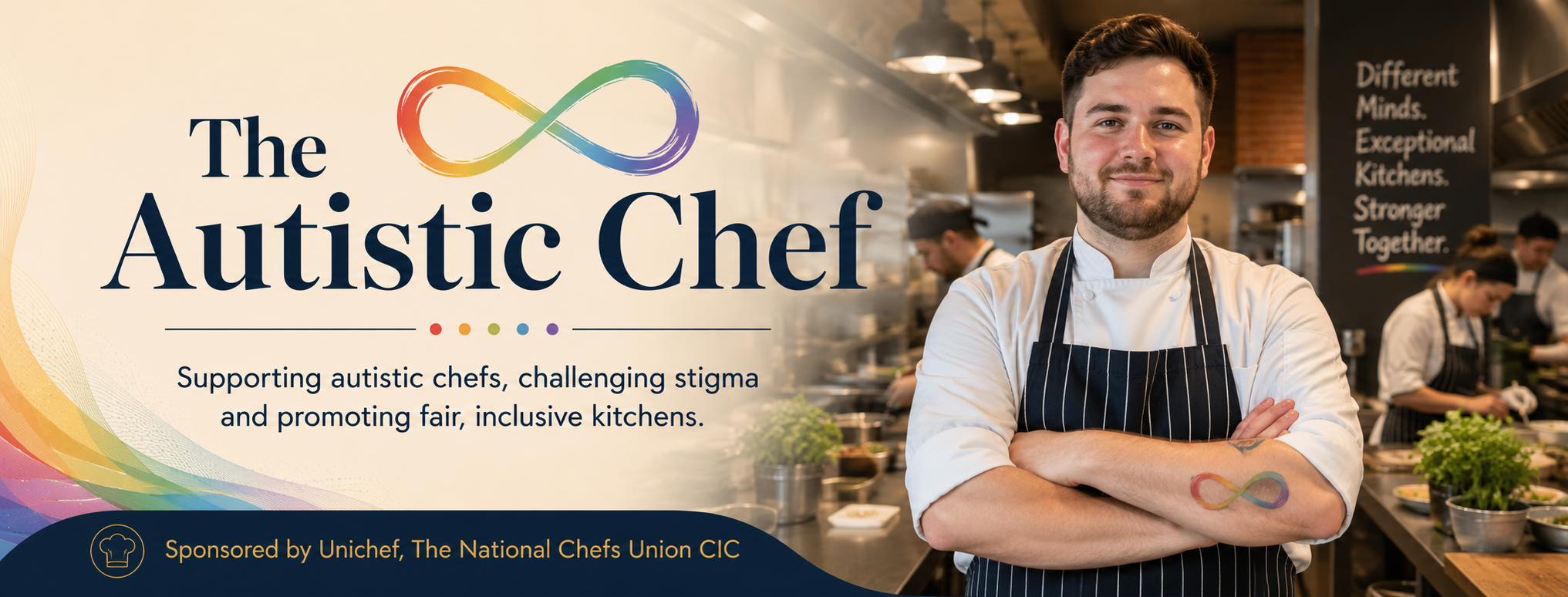 Autism in the Kitchen: Why Support, Understanding and Fair Treatment Matter Commercial kitchens can be intense places to work. Heat, noise, time pressure, equipment failures, last-minute changes and several people giving instructions at once can test even the most experienced chef. For an autistic chef, some of those pressures may be experienced more intensely or processed differently. That does not mean autistic chefs are incapable of working under pressure. Many bring exceptional focus, consistency, honesty, creativity, attention to detail and commitment to high standards. The problem is often not the chef’s ability. It is the environment and the lack of informed support surrounding them. Autism does not look the same in everyone Autism affects people differently. There is no single behaviour, communication style or adjustment that applies to every autistic employee. Some autistic chefs may prefer clear routines and precise instructions. Others may find sudden changes, competing demands, raised voices, sensory overload or unresolved concerns particularly difficult to process. An issue that another employee might temporarily put aside can sometimes remain active in the background of an autistic person’s thoughts. If concerns about safety, equipment, staffing or workplace conflict are repeatedly raised but remain unresolved, the pressure can accumulate. A further disagreement may then become the point at which that accumulated pressure turns into overload. This should not be dismissed as someone being “difficult,” “over-sensitive” or “unable to cope.” It may indicate that barriers have been allowed to build without suitable intervention. The negativity autistic chefs still face Too many neurodivergent workers are judged according to assumptions rather than their actual ability. Direct communication may be described as rudeness. A need for clarity may be labelled inflexibility. Withdrawal from an argument may be treated as insubordination. Signs of overload may be viewed as aggression without anyone examining what happened beforehand. Some autistic employees are expected to adapt completely to the workplace, while managers and colleagues are given no guidance about adapting their own communication. This imbalance can leave the employee isolated. They may be punished for reaching a crisis point even though earlier warnings, requests for help or reports of stressful conditions were not properly addressed. A diagnosis does not excuse threatening, abusive or unsafe behaviour. Employers are entitled to maintain reasonable conduct standards. But accountability must be balanced with context, support and an honest examination of whether the situation could have been prevented. The Equality Act 2010 Autism will often meet the definition of disability under the Equality Act 2010 where it has a substantial and long-term adverse effect on normal day-to-day activities. An employee does not need to claim disability benefits, be placed on a register or possess a special certificate before receiving legal protection. A formal diagnosis can provide useful evidence, but ACAS confirms that a worker does not necessarily need a diagnosis to qualify as disabled under the Act. The Equality Act protects disabled employees and workers from several forms of unlawful treatment, including direct and indirect discrimination, harassment, victimisation, discrimination arising from disability and failure to make reasonable adjustments. The duty to make reasonable adjustments Employers have a legal duty to make reasonable adjustments where a disabled worker would otherwise be placed at a substantial disadvantage. This is a positive duty. It is not enough simply to give an autistic employee exactly the same arrangements as everyone else if those arrangements create a particular disadvantage for them. Adjustments must be considered individually and can include changes to working practices, communication, the physical environment, management procedures and the support provided. Failure to make reasonable adjustments can itself amount to disability discrimination. In a kitchen, appropriate adjustments might include: a named manager whom the chef can approach when pressure is building; an agreed phrase or signal requesting a short time-out; access to a quiet and safe place to regulate; one person communicating during a crisis rather than several colleagues confronting the employee; clear, direct instructions and written confirmation of important changes; advance warning of changes to duties, menus or working arrangements where practicable; regular check-ins and review meetings; a clear system for recording and responding to safety concerns; occupational-health input where appropriate. Adjustments do not remove normal food-safety or operational responsibilities. A time-out procedure, for example, should include a safe handover of any immediate cooking or supervisory duties. Employers must act before a crisis occurs Support should not begin only after something has gone wrong. ACAS advises that before using a formal conduct, capability or performance procedure involving a neurodivergent employee, the employer should ensure it has done all it reasonably can to support that person. Adjustments may also be required during disciplinary meetings, including clearer information, additional processing time and allowing someone familiar with the employee’s neurodivergence to attend. This means an employer should ask: What did we already know about this employee? Had they previously warned us about overload, anxiety or conflict? Were reported workplace concerns properly acknowledged? Had suitable adjustments been discussed and recorded? Did managers know how to respond when the employee became overwhelmed? Could a less confrontational intervention have prevented escalation? A disciplinary hearing should not become a substitute for support that should already have been considered. Conduct connected to disability Section 15 of the Equality Act covers discrimination arising from disability. This can apply where someone is treated unfavourably because of something resulting from their disability rather than simply because they are disabled. For example, an employer might discipline someone for a behaviour, communication difficulty or reaction that arose partly from disability-related overload. That does not automatically make disciplinary action unlawful. An employer may be able to justify its decision where it is a proportionate means of achieving a legitimate aim, such as protecting colleagues or maintaining appropriate conduct. However, it should consider the disability connection, available adjustments and whether a less discriminatory response could achieve the same objective. Training is more than a box-ticking exercise There is no general legal requirement for every hospitality employer to possess a document specifically called a “Neurodiversity Policy” or to provide one named autism course. However, an employer cannot escape its Equality Act duties because it has no policy. Practical training helps managers recognise overload, communicate appropriately, discuss adjustments and respond consistently. ACAS recommends raising awareness of neurodiversity and training and supporting managers. It also recommends that reasonable-adjustment policies explain how adjustments are requested, implemented, monitored and reviewed. Training should make clear that: autism is not a capability defect; every autistic person is different; shouting, surrounding or pursuing someone who is trying to withdraw may escalate the situation; direct communication should not automatically be interpreted as hostility; an employee in overload may need time before they can answer clearly; medical information must be treated sensitively and confidentially; the same conduct standards should apply to managers and employees. Employers may also be legally responsible for discriminatory or harassing acts carried out by employees in the course of employment. Evidence of meaningful policies, training and active prevention can therefore be highly important. A better way forward A supportive employer does not lower standards. It creates a fair structure that helps people meet them. For an autistic chef, a written workplace-adjustment plan can provide certainty for everyone. It should explain the early signs of overload, who should intervene, what the employee can say or do, where they may safely withdraw, how urgent duties will be handed over and how the situation will be reviewed afterwards. The plan should be agreed with the employee rather than imposed upon them. It should also be reviewed regularly because circumstances and support needs can change. Most importantly, employers must listen when concerns are raised. A safety complaint, failing equipment or repeated workplace confrontation should not be ignored until accumulated pressure produces a crisis. Unichef’s position Unichef believes that neurodivergent chefs should be judged on their skills, professionalism and contribution—not on stereotypes about how a chef is expected to communicate or respond to pressure. Autism should never be used as an excuse for misconduct. Equally, employers should not use disciplinary procedures to punish disability-related difficulties that they made little or no effort to understand, support or prevent. Compassion, structure and accountability can exist together. A well-supported autistic chef is not a problem to be managed. They are a skilled professional who may need the workplace to remove unnecessary barriers so that they can perform at their best. A split in the spectrum? The ongoing battle to define autism WWW.BBC.CO.UK There is a continuing row over whether it matters if such a broad spectrum of people are defined as having autism The Autistic Chef | Consett WWW.FACEBOOK.COM The Autistic Chef, Consett. 1 Personen sprechen darüber. Supporting autistic chefs, challenging stigma and promoting fair, inclusive kitchens. Sponsored by Unichef, The National Chefs Union CIC. This article provides general information and should not be treated as individual legal advice.
 -
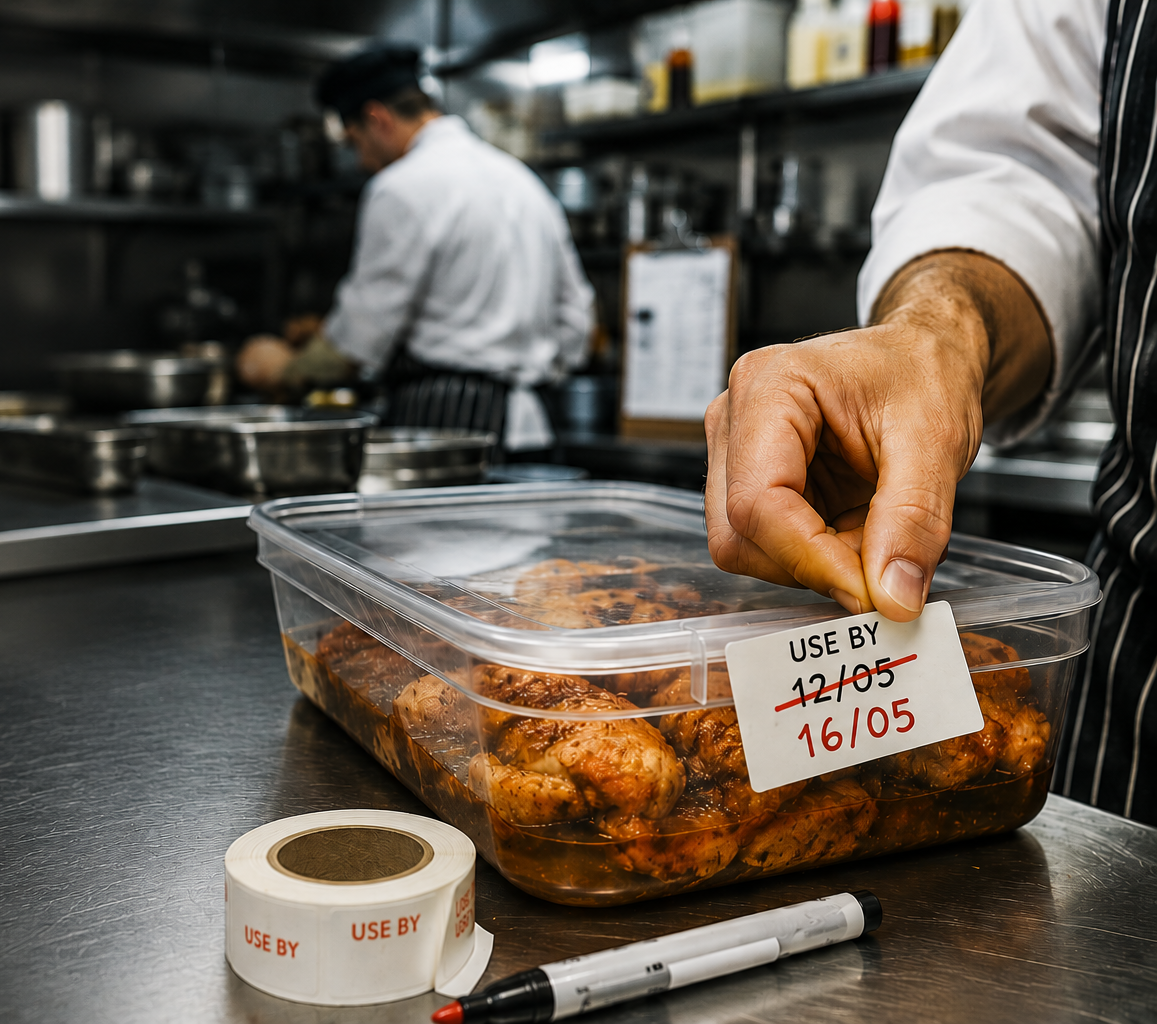 Re-labelling Food: A Habit That Could Cost You Your Career For generations, chefs have worked under relentless pressure to reduce waste, control costs and keep service moving.In some kitchens, one practice has quietly become normalised..Re-labelling food products or extending shelf-life dates. Many chefs will admit they have done it.Some have been instructed to do it.Others have inherited a culture where "changing the label" has simply become part of daily kitchen life. But those days are rapidly coming to an end. A Wake-Up Call for Every Chef Unichef has recently represented a Senior Sous Chef with almost ten years' service who was summarily dismissed for gross misconduct following allegations relating to the re-labelling of food products and the extension of shelf-life dates.The case involved far wider issues than re-labelling alone, and each disciplinary case must always be judged on its own individual facts. However, one message has become abundantly clear. Employers are now prepared to treat deliberate re-labelling as an issue of dishonesty rather than simply poor food management. That changes everything. Why It Matters A use-by date is not simply an administrative label,It forms part of a food safety control system designed to protect customers.Changing that information without proper authority can expose both customers and businesses to significant risk. Increasingly, employers are arguing that altering labels is not merely a breach of procedure but amounts to: falsification of food safety records; breach of trust; gross misconduct; grounds for summary dismissal. Whether every case justifies dismissal will always depend on the individual circumstances,B butut the risk to your career has never been greater. "Everyone Does It" Perhaps the most common phrase heard during disciplinary investigations is:"Everyone does it."That may or may not be true. Many experienced chefs will recognise that poor labelling practices have existed within parts of the hospitality industry for many years. However, what may once have been tolerated as poor practice is now increasingly becoming a disciplinary issue.The fact that something has become commonplace does not make it lawful, safe or defensible Cost Saving Must Never Override Food Safety The pressures facing today's kitchens are immense. Food inflation. Waste targets. Labour shortages. Commercial pressures. These are realities every chef understand,Bunderstands butut none of those pressures justify compromising food safety.If you believe food has exceeded its authorised shelf life—or if there is any doubt—dispose of it.No service, no GP target and no waste figure is worth risking your livelihood. What If You Are Asked to Re-label Food? If you are instructed to alter labels or extend dates contrary to company policy or food safety procedures: ask for the instruction to be confirmed; raise your concerns professionally; follow your company's documented procedures; seek advice from your union immediately if you feel pressured. Remember: Following an unlawful instruction will not necessarily protect you from disciplinary action later. A Changing Employment Landscape One of the most concerning aspects of modern employment is that employers increasingly rely upon food safety breaches as grounds for dismissal.In some cases, dismissal may be entirely justified. In others, questions may remain about proportionality, consistency or whether additional support could have resolved the problem before employment was terminated. Every case will turn on its own facts. What cannot be ignored is that the consequences have become significantly more severe than many chefs appreciate. Unichef's Advice If you work in a professional kitchen: Never alter use-by dates unless your documented food safety system expressly permits it. Never assume that "everyone does it" will protect you. Challenge unsafe practices, even if they appear commonplace. Keep accurate food safety records. If in doubt, throw it out. Food safety protects customers. It also protects your career. Final Thoughts... The hospitality industry has changed,standards are higher, and enforcement is stricter.Employers are under increasing pressure to demonstrate robust food safety compliance. The lesson from this recent case is not simply about one chef or one employer,. It is a reminder to every chef that practices once dismissed as "how kitchens work" may now carry consequences that extend far beyond the service itself. A moment's poor judgement can now cost years of hard work. Stay professional. Stay compliant. Protect your customers—and protect your career.
 -
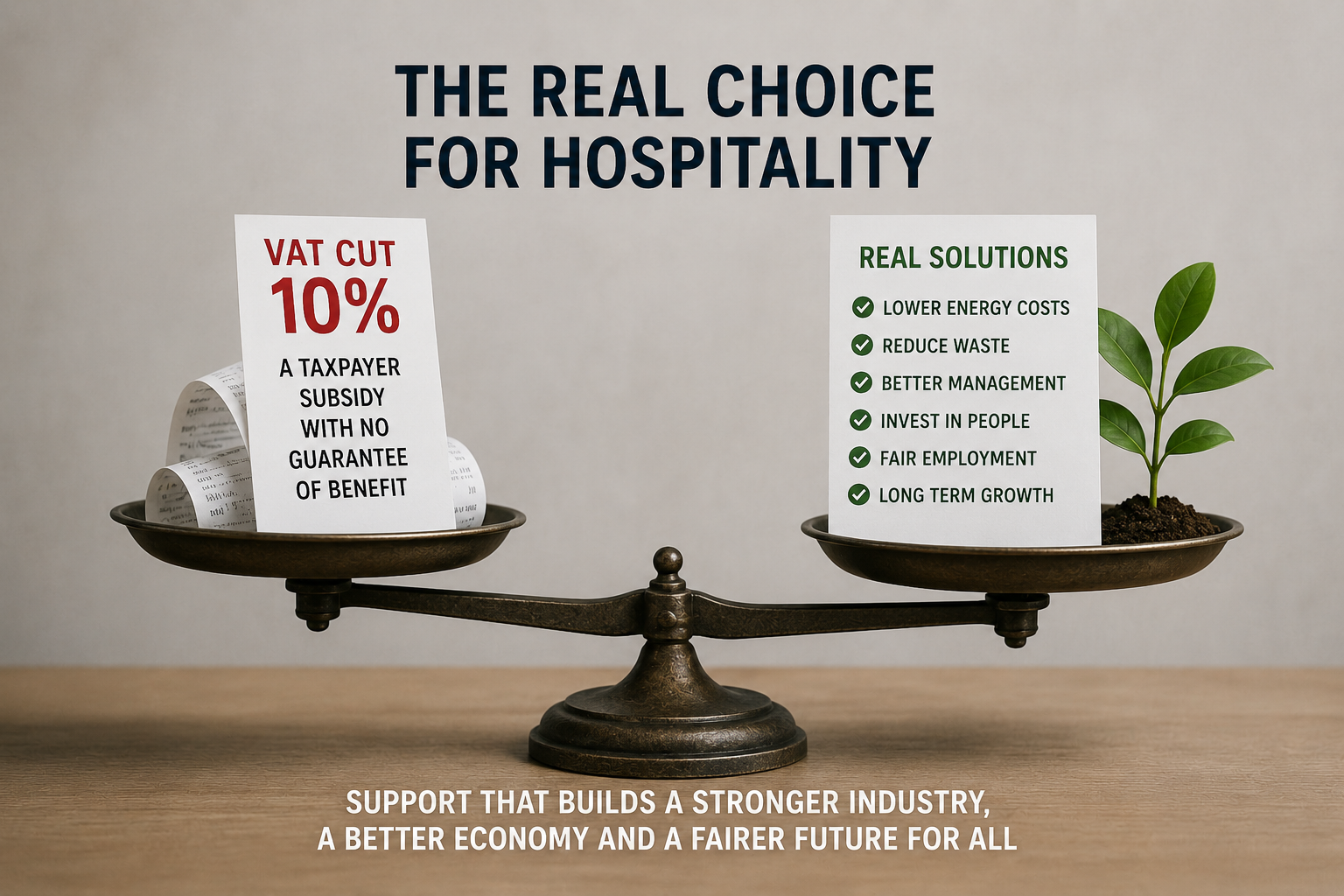 VAT Cuts or Real Reform? Unichef's View on Hospitality's Latest Campaign Recent calls from leading hospitality figures for a reduction in VAT have reignited a long-running debate about the future of our industry. Many operators argue that rising employment costs, increasing energy prices, inflation, business rates and reduced consumer spending are placing unsustainable pressure on hospitality businesses. Their solution is a reduction in VAT on food and drink sales. At first glance, the argument appears compelling. Lower VAT should reduce costs and help businesses survive. However, Unichef believes the issue deserves greater scrutiny. VAT Is Not a Business Cost One important fact often overlooked is that VAT is not generally a cost borne by the business itself. Hospitality operators collect VAT from customers and pass it to HMRC after deducting VAT already paid on purchases. The real question is not whether businesses pay VAT, but who benefits if VAT is reduced. Would menu prices fall? Would customers see better value? Would staff receive higher wages? Would working conditions improve? Or would the savings simply be absorbed into business accounts to offset existing financial pressures? There are no guarantees? A Subsidy by Another Name? Hospitality is not the only sector facing challenges. Across the United Kingdom, families are struggling with rising living costs. Manufacturing, retail, social care, education and countless other industries are facing the same pressures. A reduction in hospitality VAT would ultimately be funded through reduced government tax receipts. In simple terms, taxpayers would be asked to support one sector of the economy through a special tax concession. That may be justified in some circumstances, but it is a debate that should be held openly and honestly. Addressing Symptoms Rather Than Causes As chefs and hospitality professionals, we see first-hand where money is often lost. Food waste remains a significant issue throughout the industry. Poor forecasting, overproduction, excessive menu complexity, inefficient purchasing and high staff turnover all contribute to rising costs. At the same time, many businesses continue to struggle with outdated equipment, excessive energy consumption and operational inefficiencies. A VAT reduction does not address any of these problems. It simply provides temporary financial relief while leaving the underlying challenges unresolved. Energy Costs Affect Everyone If government intervention is required, Unichef believes there is a stronger argument for measures that benefit the entire economy. Reducing energy costs would help restaurants, pubs, hotels, schools, hospitals, care homes, manufacturers and households alike. Unlike a VAT reduction targeted at one sector, lower energy costs would support businesses and consumers across the board. Such measures could also encourage investment, improve competitiveness and help reduce inflationary pressures throughout the economy. The Workforce Must Not Be Forgotten Any discussion about support for hospitality must include the workforce. The industry continues to face recruitment and retention challenges. Long hours, workplace stress, heat exposure and wage pressures remain significant concerns. If public money is used to support hospitality businesses, workers should expect to see tangible benefits in return. Support should be linked to better employment practices, investment in training, safer working environments and improved career opportunities. A Balanced Debate Unichef recognises that many hospitality businesses are facing genuine hardship. We understand the pressures operators are under and acknowledge the challenges created by rising costs. However, we are not convinced that a blanket reduction in VAT is the solution. The hospitality industry requires long-term sustainability, not short-term fixes. Before asking taxpayers to fund another sector-specific concession, we should ask whether we are addressing the real causes of the industry's difficulties. A successful hospitality sector will not be built solely on tax reductions. It will be built on efficient businesses, skilled staff, responsible management, sensible regulation and investment in the people who make our industry possible. That is the debate we should be having.
 -
 A New Era for Chefs: The Law Has Finally Caught Up For decades, the hospitality industry has operated in a space where long hours, unpredictable shifts, and limited protections were simply accepted as “part of the job.” At Unichef, we have never accepted that. We have spent years challenging those norms — speaking directly to policymakers, engaging with industry leaders, and standing firm in our belief that chefs deserve the same dignity, protection, and fairness as any other profession. Many of you will remember when we first spoke about the recommendations of Matthew Taylor and his landmark “Good Work Plan.” At the time, it felt ambitious. Perhaps even distant. Today, it is becoming a reality. From Campaigning… to Law We are proud to say that many of the protections Unichef has long advocated for are now being written into UK law. Some changes are already in force. Others will come into effect over the next 12–24 months. Together, they represent one of the most significant shifts in employment rights in a generation — and a defining moment for our profession. 1. Sick Pay From Day One (April 2026) For the first time: Statutory Sick Pay will be paid from day one of illness The minimum earnings threshold is removed Why this matters: Too many chefs have worked through illness because they simply couldn’t afford not to. That culture must now change. 2. Stronger Protection Against Unfair Dismissal (January 2027) Major reforms include: Protection from unfair dismissal after 6 months (down from 2 years) Removal of the cap on compensation awards Why this matters: This is a seismic shift. It gives chefs real protection far earlier in their employment and meaningful recourse when things go wrong. 3. The Beginning of the End for Zero-Hours Abuse (2027) Workers will gain: The right to guaranteed hours contracts (if they choose) Why this matters: For too long, chefs have lived with uncertainty over income and hours. This change introduces stability and choice. 4. Fair Notice of Shifts & Compensation for Changes (2027) Employers must now: Provide reasonable notice of shifts Pay compensation if shifts are: Cancelled Cut short Moved at short notice Why this matters: This tackles one of the most damaging practices in hospitality — last-minute changes that disrupt lives and finances. 5. Flexible Working Becomes a Real Right (2027) Employers will now be required to: Justify refusals using specific legal grounds Clearly explain why the refusal is reasonable Why this matters: Flexible working will no longer be dismissed casually — it must be properly considered and justified. 6. Stronger Protections Against Harassment (2026–2027) The law will clarify what “reasonable steps” employers must take to prevent harassment. Why this matters: Kitchen culture must evolve. Respect, safety, and professionalism are no longer optional — they are legal expectations. 7. A New Era for Trade Union Rights (October 2026) New rights will include: Employers must inform workers of their right to join a union Improved union access to workplaces Rights to facilities and time off for union representatives Support for union equality roles Why this matters: This is transformational. It recognises the critical role unions play in protecting workers and raising standards across the industry. This Didn’t Happen by Accident These changes are not simply political decisions. They are the result of years of pressure, evidence, and advocacy — from organisations like Unichef and from chefs like you who have shared your experiences and stood up for change. We have: Challenged poor working practices Represented chefs in difficult cases Influenced conversations at the highest levels Refused to accept that “this is just how hospitality is” What Happens Next This is not the end — it is the beginning. The law can change overnight. Culture takes longer. And that is where Unichef remains essential. We will continue to: Support members through these new rights Hold employers accountable Educate chefs on what these changes mean in practice Push for even greater protections where needed A Message to Every Chef This moment matters. For the first time in a long time, the system is beginning to recognise what we have always known: Chefs are not expendable. Chefs are professionals. Chefs deserve protection, respect, and a fair working life. And now — the law is finally starting to reflect that.
 -
 UK Hospitality on the Brink: Rising Costs, Failing Giants, and a Sector at a Turning Point A Perfect Storm Facing UK Hospitality The UK hospitality sector is approaching a critical inflection point. Recent industry data indicates that one in five hospitality businesses fears collapse within the next 12 months, with many already operating on razor-thin or negative margins. At the same time, two-thirds of operators are planning job cuts, and one in seven expects to close. This is no longer a cyclical downturn—it is a structural crisis. Behind these figures lies a convergence of pressures: Rising labour costs Increased employer National Insurance contributions Escalating business rates Energy volatility Reduced consumer spending Yet while these pressures are real, the narrative emerging from parts of the industry—particularly around wages—requires careful scrutiny. When Even the Giants Struggle Heston Blumenthal: Fine Dining Under Pressure The planned closure of Dinner by Heston Blumenthal marks a symbolic moment for the industry. Despite global recognition and critical acclaim, reports indicate: Sustained financial losses Declining commercial viability Strategic retrenchment rather than expansion This is not an isolated case—it reflects a broader shift in the economics of premium dining, where high labour intensity meets cost inflation and changing consumer habits. Gordon Ramsay Group: Growth at a Cost 4 The challenges are equally visible within the Gordon Ramsay Restaurants group: Reported losses of approximately £13 million Around 200 jobs were cut Rising operating costs despite strong revenues Even at scale—with global branding and diversified income streams—the UK restaurant model is under significant strain. Unichef Position: Wages Are Not the Problem — They Are the Correction At the centre of the current debate is a familiar argument: that rising wages are pushing businesses to the brink. Unichef fundamentally rejects this position. Wages are not the cause of this crisis. They are the long-overdue correction of it. For decades, hospitality has operated on a model characterised by: Below-market pay for highly skilled labour Long hours normalised as industry culture Profitability underpinned by labour suppression This is not conjecture—it is supported by long-standing labour market evidence. Economic Reality: A Historically Low-Paid Sector According to the Office for National Statistics: Hospitality has consistently ranked among the lowest-paid sectors in the UK economy Median hourly pay in accommodation and food services has historically lagged behind national averages Similarly, the Resolution Foundation has repeatedly highlighted: The sector’s reliance on low-wage labour models High levels of in-work poverty among hospitality workers This is reinforced by findings from the Low Pay Commission, which oversees minimum wage policy and has noted: Hospitality as one of the sectors most affected by minimum wage increases due to historic underpayment The Scapegoating of Wages Must End To suggest that fair pay is now the cause of collapse is to ignore a more uncomfortable truth: 👉 The business model itself is under strain. Economic theory supports this. The concept of a “low-road labour model”—widely discussed in labour economics—describes industries that compete primarily through cost suppression rather than productivity or innovation. Hospitality in the UK has, in many cases, followed this path. Now, as wages rise: Margins are exposed Inefficiencies are revealed Unsustainable expansion models begin to fail This is not a wage crisis. It is a model correction. Customers Have Always Paid — The Hidden Subsidy Ends There is another economic reality often overlooked: Consumers always bear the true cost of production. Historically, hospitality has artificially suppressed visible prices by: Embedding costs into labour exploitation Increasing workload rather than staffing levels Relying on unpaid or underpaid time As labour costs normalise, pricing must follow. This aligns with basic economic principles of: Cost pass-through Market price correction What is happening now is not distortion—it is realignment. The Failure of Overexpansion and Chain Growth The current crisis is also exposing the fragility of rapid expansion strategies. Many operators pursued: Multi-site scaling High fixed overheads Centralised cost structures In favourable conditions, this delivered growth. Under pressure, it creates vulnerability. This reflects classic economic risk models, where: High fixed-cost businesses are less resilient to demand shocks Labour-intensive sectors are more exposed to wage correction cycles The result is what we are now seeing: 👉 Retrenchment, closures, and restructuring A Sector at a Crossroads The question facing hospitality is no longer whether conditions are difficult. It is whether the industry is willing to adapt. What Evolution Looks Like A sustainable future requires: Honest pricing that reflects real costs Reduced reliance on excessive working hours Investment in staff retention and skills Smaller, more resilient operating models A shift from scale to quality and sustainability This is not idealism—it is economic necessity. A Line in the Sand Unichef’s position is clear: We will not support any narrative that: Blames workers for structural failure Frames fair pay as a burden Seeks a return to exploitative labour practices Instead, we advocate for: A professionalised workforce A sustainable business model An industry built on fairness, not fragility Conclusion: The Real Question If businesses are struggling now that wages are rising, the question is not: “Why are wages too high?” The real question is: “Why were they ever so low?”
 -
 Recent reporting by the BBC and wider media has highlighted what many in hospitality are now experiencing daily a significant shift in how people engage with eating out. Rising costs, reduced disposable income, and changing consumer habits are placing unprecedented pressure on pubs, restaurants, and the wider hospitality sector. But at Unichef, we believe this moment should not be viewed purely as a crisis. It is something far more fundamental. It is evolution. An Industry Under Pressure Across the UK, the signs are clear. Rising energy, labour, and tax costs are squeezing margins to unsustainable levels Consumer spending is falling as households prioritise essentials Closures are accelerating across pubs, restaurants, and independent venues Industry data shows thousands of closures in recent years, with some reports suggesting over 1,100 venues shutting since 2024 alone . At the same time, operators are facing dramatic increases in operating costs, with wages, energy, and taxation all rising sharply . Even large, established groups are restructuring, reducing estates, or shifting business models to survive . This is not a short-term dip. This is structural change. The Return of the Home One of the most significant shifts — and one that aligns closely with Unichef’s long-held view — is the return to home cooking. Consumers are: Cooking more meals at home Seeking value through supermarkets and premium ready meals Reducing discretionary spending on dining out This trend, often described as the rise of the “eat-at-home economy,” is accelerating as households adapt to economic pressure. In simple terms: Too Much Supply, Not Enough Demand For many years, the UK hospitality sector expanded rapidly. Over 200,000 eating venues now exist across England alone Dining out became routine rather than occasional Competition intensified, margins tightened, and sustainability weakened Unichef has consistently maintained that the sector had reached a point of over-saturation. There are simply too many outlets chasing too few customers. What we are now witnessing is what can only be described as: Natural Preselection Not every business can — or should — survive. Dining Out Becomes Special Again Historically, dining out was not an everyday occurrence. It was: A celebration A family occasion A rare and valued experience We are now returning to that model. As costs rise and consumer habits shift, dining out is increasingly becoming: Less frequent More intentional More experience-driven This is not a decline in hospitality. It is a redefinition of its purpose. What This Means for the Industry This transition will undoubtedly be painful. Closures, restructuring, and job losses are real and ongoing challenges. But within this change lies opportunity. The future will belong to operators who: Deliver genuine quality and value Offer experiences that cannot be replicated at home Run sustainable, well-managed businesses Adapt to changing consumer expectations Mediocrity will struggle. Excellence will survive. Unichef’s Position At Unichef, we take a clear and pragmatic view: We are not witnessing the end of hospitality. We are witnessing its evolution into something stronger, leaner, and more meaningful. Dining out will not disappear. But it will once again become what it was always meant to be: Something special Final Thought The industry is not dying. It is resetting. And those who understand that — who embrace change rather than resist it — will define the next generation of hospitality in the UK. 'We can't justify a £52 lunch': Middle-income families cut back on fun as prices rise WWW.BBC.CO.UK A household with an average gross income of £55,000 has cut spending on leisure activities by £40 a week, offical figures suggest.
 -
 Shocked… Not Really: Why Abuse in Professional Kitchens No Longer Surprises Anyone Recent revelations surrounding René Redzepi and the culture inside the world-renowned restaurant Noma have caused headlines across the food world. Many observers have expressed shock at reports of harsh behaviour, intimidation and verbal abuse within elite kitchens.Within the hospitality industry, however, the reaction has been rather different. Shocked? Not really. For many chefs and hospitality professionals, the behaviour described is not new, unusual, or even surprising. It is part of a culture that has been quietly tolerated and in some cases openly celebrated — for decades. The Normalisation of Abuse in Kitchens The modern professional kitchen is still heavily influenced by the old brigade system, a military-style hierarchy designed to ensure discipline and efficiency during service. In theory, the system promotes order. In practice, it has too often created environments where: shouting is considered leadership humiliation is considered training intimidation is considered motivation Young chefs entering the industry quickly learn that enduring harsh treatment is seen as a rite of passage. Many accept it because they believe “that’s just how kitchens work.” When Bullying Became Entertainment No discussion of this culture can avoid the influence of Gordon Ramsay. Ramsay’s television career built a global brand around explosive kitchens, aggressive leadership and public humiliation of chefs and contestants. Programmes such as Hell's Kitchen turned shouting, swearing and intimidation into prime-time entertainment. For millions of viewers, this became their primary image of what a professional chef looks like. Ask someone in the street to name a famous chef and many will say Gordon Ramsay. Ask them what he is known for, and the answer is rarely cuisine. It is usually bullying, shouting and swearing. What was once an internal kitchen culture became mainstream entertainment, and in doing so it helped normalise behaviour that would be unacceptable in almost any other workplace. The Role of Industry Gatekeepers There is also a deeper structural issue within fine dining.Institutions such as Michelin Guide and the AA hold enormous influence over chefs’ careers. Michelin stars can determine whether restaurants succeed or fail.Yet when allegations of abusive workplace culture arise, these institutions rarely intervene Recognition continues to be awarded based purely on culinary output, while the working conditions inside those kitchens often remain unexamined. This raises a difficult question: Should excellence in food excuse unacceptable treatment of staff? At present, the industry’s most powerful institutions appear to think so. A Culture That Reproduces Itself Abuse in kitchens rarely appears in isolation. Many chefs who behave aggressively today trained under mentors who behaved the same way. The behaviour is inherited, repeated and passed down to the next generation,Redzepi has admitted this. If abuse breeds further abuse, then the continued celebration of aggressive leadership inevitably perpetuates the cycle. Add to this: the tattooed “macho chef” stereotype social media trends that glorify aggression a lack of meaningful accountability from industry leaders …and the result is an environment where toxic behaviour can thrive unchecked. Why Unions and Legal Remedies Matter For many chefs, the only meaningful protection now comes through employment law. In the United Kingdom, chefs increasingly rely on: workplace grievance procedures employment tribunals whistleblowing protections union support Where industry culture fails to protect workers, legislation and litigation become the only effective safeguards. Will the Noma Story Change Anything? The situation at Noma has reignited the conversation around workplace culture in elite kitchens.But history suggests that genuine change will require more than headlines. Real reform will only occur when: industry leaders speak openly about abuse prestigious institutions take workplace culture seriously and abusive behaviour carries real consequences Until then, stories like this will continue to emerge,and each time they do, the reaction from many inside the profession will remain the same Shocked...Not really.
 -
 Celebrating Strength, Skill and Leadership: International Women’s Day 2026 Today, on International Women’s Day, we pause to recognise and celebrate the remarkable women who shape the hospitality and culinary industry every single day. At Unichef – The National Chefs Union, this day holds particular meaning because supporting equality, dignity and opportunity in professional kitchens has always been central to our mission. A Changing Industry For decades, professional kitchens have often been perceived as a male-dominated environment, where long hours, traditional hierarchies and outdated attitudes made it difficult for many talented women to thrive. Despite these barriers, women have consistently demonstrated extraordinary resilience, creativity and leadership within our industry. Across restaurants, hotels, schools, hospitals and catering operations throughout the UK, women are now leading kitchens, mentoring teams, developing menus and shaping the future of hospitality. Yet meaningful progress does not happen by accident. It requires support, advocacy and a culture that recognises talent regardless of gender. Unichef’s Commitment to Women in Hospitality From the moment Unichef was founded, we recognised that our union must represent all chefs and hospitality professionals, and that meant ensuring women felt welcome, protected and supported within our organisation. Over the years, we have: Supported female members through workplace disputes and employment issues, ensuring their voices are heard and respected. Challenged discriminatory workplace practices when they arise. Promoted fair treatment, dignity and professional respect for women in kitchens. Encouraged greater participation and representation of women within the union. Highlighted the achievements of female chefs and hospitality professionals across our networks. We have also seen women step forward not just as members, but as leaders, mentors and advocates for others entering the industry. A Remarkable Transformation When Unichef first began building its membership base, women represented just 2% of our membership. Today, we are proud to say that female membership now exceeds 23%, and continues to grow every year. This transformation is not simply a statistic. It represents: Hundreds of talented women choosing to join a union that represents them. A growing sense that the hospitality industry can and should be a fairer place to work. A shift in culture where women feel increasingly confident that their professional rights and wellbeing will be protected. The Strength Women Bring to the Kitchen Professional kitchens thrive on discipline, creativity, teamwork and resilience—qualities that women across the industry demonstrate every day. Women chefs bring not only exceptional culinary talent, but also: Leadership and mentorship Innovation in menu development Strong team culture and communication A commitment to professionalism and standards Many of our female members are also balancing demanding careers with family responsibilities, proving daily that excellence in hospitality and personal life can coexist with the right support. The Work Is Not Finished While progress is real, we recognise there is still work to be done. Women in hospitality still face challenges including: Workplace discrimination or harassment Unequal career progression opportunities Work-life balance pressures Cultural stereotypes about kitchen leadership At Unichef, we remain committed to standing beside every member who faces these challenges. Looking Forward International Women’s Day is not just about reflection—it is about commitment to the future. As we continue to grow, Unichef will: Encourage more women to join and shape the future of the union Continue defending the rights of female chefs and hospitality professionals Promote respect, professionalism and equality in every kitchen Celebrate the achievements of women who inspire the next generation A Message to Our Female Members To all the women who are part of Unichef: Your skill, determination and professionalism strengthen our union and enrich our industry. Whether you are a commis chef just starting out, a sous chef running a section, or a head chef leading a brigade, your contribution matters. Today we celebrate you. And we thank you for helping build a stronger, fairer and more inclusive hospitality industry for everyone. Happy International Women’s Day from Unichef – The National Chefs Union. Women built, and still shape, our culinary culture every day | Food | The Guardian WWW.THEGUARDIAN.COM In kitchens both private and professional, women have been leading innovation for generations – from giving value to domestic traditions to calling out sexism
 -
 There was a time — not so long ago — when eating in a restaurant was not routine. It was not a weekly convenience, not a default Friday night plan, not an algorithm-suggested delivery,It was an occasion. For many working families in the 1970s, a restaurant meal meant birthdays, anniversaries, or life’s small victories. It carried anticipation. It carried meaning. And perhaps most importantly — it carried value. Today, we are told the restaurant sector is in crisis because fewer people are dining out. Headlines speak of closures. Commentators speak of hardship. Operators speak of survival. But what if what we are witnessing is not collapse — but correction? For years, Unichef has argued that the hospitality sector expanded beyond sustainable demand. Cheap finance, rapid franchising, casual dining chains, and the race for market share created an industry that was not just competitive — but crowded. Streets filled with venues chasing the same customers, at the same times, with increasingly similar menus. Growth became volume-driven rather than value-driven. The pandemic did not create the current contraction. It merely exposed structural fragility that already existed. Now the numbers tell the truth. The UK has lost thousands of restaurants since 2019. Diners are eating out less frequently. Prices have risen. Disposable income has tightened. These are not signs of failure alone,they are signs of market rebalancing. In economic terms, this is natural selection. Businesses that were built on thin margins, heavy borrowing, or unsustainable models will fall away. Those with strong foundations, identity, standards, and loyal customers will remain. This is not cruelty. This is how industries mature. We should also be honest about something rarely said aloud,dining out was never meant to be routine. When a meal out becomes as casual as making toast, something is lost — not only for chefs, but for diners. Craft becomes commodified. Skill becomes discounted. Experience becomes expected rather than appreciated. A restaurant should not have to compete with the price of a supermarket meal deal. It should compete on experience, quality, and memory. When dining returns to being occasional rather than constant, something remarkable happens: Standards rise Craft regains value Diners appreciate the experience more Chefs regain professional pride Businesses can operate sustainably A smaller industry is not a weaker industry,It can be a stronger one.The real question is not,“Why are restaurants closing?”It is:“Why were there so many to begin with?” If policymakers truly wish to support hospitality, the answer is not simply subsidies or temporary relief. It is creating conditions where: Good operators can thrive Skilled professionals are respected Quality is rewarded Sustainability replaces saturation Restaurants are cultural institutions, they bring communities together. They showcase heritage, skill, and creativity.But like any ecosystem, they must exist in balance, Perhaps the future of hospitality is not a return to excess — but a return to meaning. And perhaps that is not a crisis at all, perhaps it is progress? Is eating out too expensive now? Families say higher prices put them off WWW.BBC.CO.UK The restaurant industry says it is facing a double whammy - rising costs and customers with less money.
 -
 AI and Us At Unichef, we have always believed that independence, innovation and practical support go hand in hand. In recent years, one tool has quietly but profoundly transformed how we work: artificial intelligence. AI is not a replacement for people, judgement or lived experience. It is a partner. It opens doors to new ideas, sharper thinking and clearer vision. It allows us to test arguments, explore angles, sense-check decisions and see further ahead than we otherwise could. For an organisation built on problem-solving and advocacy, that matters. In very practical terms, AI has become another lever in our work for members. It supports complex case preparation, helps us navigate ever-changing employment legislation, and assists in structuring correspondence, evidence and strategy. The result is simple but powerful: we can handle more cases, more effectively, without losing the human focus that sits at the heart of everything we do. Time saved on technical labour is time given back to the people who need us most. Our collective knowledge has expanded dramatically. Employment law, process, precedent and compliance can be interrogated at speed, challenged, refined and applied with a depth that would once have taken years to build. In real terms, AI has propelled Unichef forward by several years — not by cutting corners, but by strengthening our foundations. This is not a finished journey. The relationship between Unichef and AI is evolving, learning and deepening every day. Used responsibly, critically and ethically, it is becoming a serious partner in our mission: to protect chefs, to raise standards, and to ensure that no one faces injustice at work alone. AI doesn’t define us — but it empowers us. And used in the right way, it helps us be exactly what we set out to be: innovative, informed, and relentlessly on the side of our members. Oh,and in case your wondering..yes Chat did this as well ?
 -
 2026: A Year of Progress, Protection and Purpose As we step into 2026, Unichef enters the year stronger, clearer in its mission, and more determined than ever to protect and advance the working lives of chefs across the UK. The year ahead is not about slogans or soundbites — it is about delivery. About turning hard-won experience into meaningful change for members on the ground, in kitchens, hotels, care homes and catering operations nationwide. A Union That Stands Firm In 2026, members can expect Unichef to continue doing what it does best: standing up when it matters most. We will remain visible, vocal and unafraid to challenge unfair dismissals, unsafe working practices, bullying cultures and procedural failures — whether that is through early resolution, formal representation, or litigation where necessary. Our growing casework, tribunal successes and negotiated outcomes have already shown what a focused, specialist chefs’ union can achieve. That momentum carries firmly into this year. Raising Standards — Not Just Defending Rights 2026 also marks a shift from reactive to proactive unionism. This year sees the expansion of Unichef’s work with employers who genuinely want to do better — setting clear expectations around fairness, respect, legal compliance and workplace dignity. Our work is no longer just about challenging poor practice, but about recognising and encouraging good employers who value chefs as professionals, not commodities. This approach protects members, stabilises workplaces, and strengthens the profession as a whole. Support in a Changing Industry The hospitality industry is evolving rapidly — immigration sponsorship, agency practices, skills shortages, rising costs and pressure on public services all affect chefs directly. In 2026, Unichef will continue to: Scrutinise emerging employment practices Challenge exploitation and wage suppression Speak openly about the wider social impact on housing, health and job security Ensure chefs — British and migrant alike — are treated lawfully and fairly Our position is simple: fairness for one group must never come at the expense of another. A Stronger Union, Built for the Future Behind the scenes, 2026 is also a year of consolidation and preparation. Governance, structures and systems are being strengthened to ensure Unichef remains independent, credible and resilient for years to come. This work may not always be visible — but it is essential. A union that plans for the future is a union that can protect its members when it counts. What Members Can Expect Above all, members can expect consistency: Clear advice Honest representation Measured but fearless advocacy A union that understands kitchens — because it comes from them Unichef enters 2026 not chasing headlines, but quietly building something stronger: a union that chefs can rely on, trust, and be proud to belong to. 2026 is not just another year. It is a year of purpose — and of progress.
 -
 The UK hospitality industry has long benefited from the skills and dedication of migrant chefs, and Unichef continues to value their vital contribution to our sector. However, Unichef is increasingly concerned about the rapid expansion of immigration sponsorship within the hospitality agency industry, and the impact this is having on chefs, wages, and workforce security. Immigration sponsorship was designed to fill genuine skills shortages through stable, permanent roles. In some cases, it is now being applied to agency-based labour models built on flexibility and short-term placements. This has created situations where sponsored chefs are offered full-time, fixed-hour contracts, while other chefs — including British and nationalised workers — remain on zero-hours or insecure arrangements, despite doing the same work,we belive this to be a form of indirect discrimination. This risks creating a two-tier workforce. While immigration rules may require guaranteed hours for sponsored workers, that requirement should not be used to justify the routine denial of secure employment to other chefs. Where nationalised or settled workers are excluded from full-time opportunities, serious questions arise about fairness and the potential for indirect discrimination. Unichef is also concerned about the wider effects on pay and conditions. Ready access to sponsored labour can reduce pressure on employers and agencies to improve wages, invest in training, or offer permanent roles, contributing to wage suppression across the sector. There are broader social impacts too. Increased reliance on sponsored labour, without coordinated planning, adds pressure to local housing markets and public services, including the NHS. These challenges are not caused by migrant workers, but by policy choices that prioritise short-term labour solutions over long-term workforce sustainability. Unichef is equally concerned about the position of sponsored workers themselves. Visa-linked employment can create dependency and vulnerability, limiting a worker’s ability to challenge unfair treatment, refuse unsuitable shifts, or move freely within the labour market. A system that relies on fear of visa loss to maintain workforce compliance is not ethical, and it is not compatible with a profession that values skill, safety, and dignity. What Unichef is calling for is balance and fairness. Immigration sponsorship must not become a mechanism for casualising the wider workforce or sidelining nationalised and settled chefs from secure employment. Agencies that can offer full-time, fixed roles to one group should not routinely deny the same opportunity to others doing identical work. Sponsorship must be used to address genuine shortages, not to entrench inequality or suppress wages. Unichef believes in a fair, ethical, and sustainable hospitality industry. Immigration sponsorship must be used responsibly, with proper oversight, and must not become a tool for casualising work, suppressing wages, or dividing the workforce. We will continue to stand up for all chefs — migrant, nationalised, and domestic — and to campaign for a sector built on fair pay, secure work, and professional respect. Unichef – Supporting Chefs. Championing Fairness. Building the Future.
 -
 A Landmark Victory for Justice: Unichef Stands With Chef Victoria Barker Unichef is proud to share the news of a significant and hard-fought victory in the case of Victoria Barker, who has successfully proven she was unfairly and wrongfully dismissed from her role as a chef at Grange Lea Care Home.https://assets.publishing.service.gov.uk/media/685e5b5ee44db4975be00b1c/Victoria_Barker_-vs-_Orange_Care-Grange_Lea_Ltd_-_1402352.2024_-_Judgment.pdf This outcome was not simply a legal win; it was an act of restored dignity and recognition of truth. Victoria had served the organisation for five years, with an exemplary record and consistent praise for her skill, dedication, and professionalism. During the hearing, both her former employer and line manager described her as a “fantastic chef” and openly acknowledged that her talent and reliability had been pivotal to the running of the kitchen. Yet despite this, she was dismissed in a process that fell far below lawful and fair standards. The Tribunal found that the employer failed to carry out any meaningful or fair investigation and denied Victoria the procedural rights that every employee is entitled to. In recognition of these failings, the Tribunal imposed the maximum 25% penalty uplift under the ACAS Code, a measure reserved only for the clearest and most serious departures from fair conduct. Victoria’s dismissal was not justifiable, and the Tribunal recognised that. But the significance of this case goes beyond the legal findings. Victoria’s journey has been one of courage, resilience, and determination. She endured not only the emotional strain of losing her position and her professional identity, but also the stigma and stress that followed. Where many would have felt pressured into silence, Victoria insisted on standing up — both for herself and for every chef who has been treated without fairness, understanding or respect. It takes enormous bravery to confront injustice when you are already struggling. Victoria did exactly that. Unichef stood with Victoria from the beginning. We prepared the case, we challenged the employer’s assertions, we exposed the failures in process, and we remained present at every stage. This outcome demonstrates the difference that strong, independent, specialist representation makes. We are not a passive membership organisation. We are a voice, a shield, and when necessary — a force. This case sends a clear message to the hospitality and care sectors: Chefs are professionals. They deserve respect. They deserve lawful treatment. And they deserve fair process. Where these standards are ignored, Unichef will act, and we will continue to act — decisively, publicly, and without compromise. Victoria’s victory now stands as an example to others who have been mistreated or dismissed without justification. It shows what can be achieved when a worker refuses to be silenced, and when a union stands behind them without hesitation. To Victoria: Your courage has changed more than your own story. You have helped change the industry. You have shown that dignity is worth defending. And we are honoured to have stood with you. This is not just your victory — it is ours, together. Unichef – The National Chefs Union CIC Defending chefs. Strengthening our profession. Changing the culture of kitchens for the better.